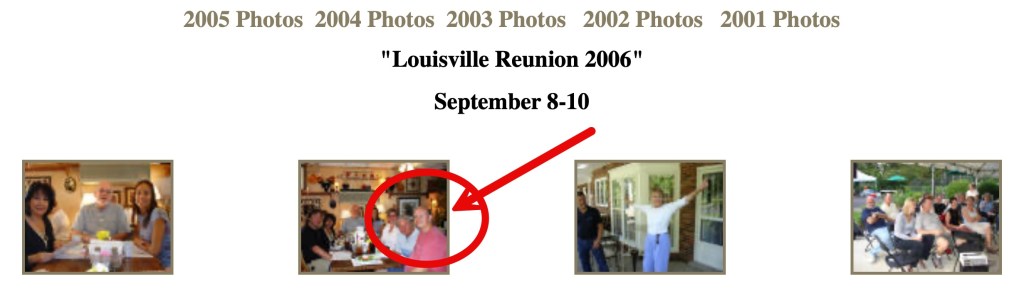
The old Christasus [dot] com website from Archive [dot] org2006 was the first year I attended
The Louisville Reunion was hosted by the Warren and Bunting families in the back yard between their two homes. It started in 1975 and ended in 2011. I attended this annual 3 day tent meeting in September 2006 when I wanted to understand union and the oneness the son enjoyed with the Father as described in John 17.
I was invited to the meeting by Dee Dee Winter after she responded to my emails asking what union was. I has just left organized religion the previous year, 2005 after I asked a church pastor if he knew where the Kingdom of God was.
His response wasn’t what I had expected and I knew in a split second by his nebulous and theological response that he didn’t know himself. Then it dawned on me that if he didn’t know then it’s likely that his congregation wouldn’t know either. The Lord made it clear I should look elsewhere for answers because religion though well meaning is often the blind leading the blind.
This is when I found the Louisville reunion and got the invite from Dee. I went to the weekend and cam back a changed man.
I found folk who were welcoming and loving in a way I had not experienced before.
Friends at the tent meeting, Dan Stone far right.
The tent meeting was not dominated by a single speaker all weekend, but was everyday folk who lived from this union experience sharing their stories, their testimonies and though there were some talks, all by different people, no one person dominated.
This was what I was hoping to find and I had found what I was looking for, union, Christ as us, the hope of glory (Col 1:27)
Knowing these facts intellectually was not the same as living them as I write this 18 years. The first book I read that the community recommended was
It’s a play on words of course, but its so true, organized religion tends to preach the predictable gospel, it does wear you out, but some of the truth is missing.
When was the last time the Pastor at your church revealed that God lives His life in you, AS YOU?
By Tony Maden (ANTNY / IAM.CHR1ST.ASUS) Part of the “Divine Echoes: God’s Story in Every Song” series
“For our struggle is not against flesh and blood…” — The Bible, Ephesians 6:12
🎭 “Games without frontiers, war without tears…”
When Games Without Frontiers was released in 1980, it sounded strange, playful, intellectual, and unsettling all at once. Children’s chants. Foreign phrases. Competitive imagery. National stereotypes. Beneath the quirky art-pop surface lurked something colder:
Humanity treating conflict like entertainment.
The song paints nations and ideologies as children playing games in a muddy schoolyard while real human lives hang in the balance. Flags wave. Teams form. Rivalries intensify. Yet underneath the costumes, the same fallen patterns repeat generation after generation.
The battlefield changes shape:
politics
religion
economics
race
media
social status
even family systems
…but the human heart remains capable of turning life into competition instead of communion.
Peter Gabriel’s lyrics feel prophetic now in an age of algorithmic outrage, tribal identity wars, and digital coliseums where people score points rather than seek truth. 🌍⚔️📱
🧩 The Babel Pattern
Spiritually, the song echoes the ancient fracture of humanity after the Tower of Babel.
Human beings were created for unity with God and one another, yet pride fragmented language, identity, and purpose. Ever since, civilization has continually rebuilt new towers:
ideological towers
technological towers
national towers
personal towers of ego
And each one whispers:
“Let us make a name for ourselves.”
The tragedy is not diversity itself. Diversity was always part of creation’s beauty. The tragedy is separation without love.
“Games Without Frontiers” exposes what happens when human identity becomes detached from divine identity: people stop seeing neighbors and start seeing opponents.
👑 Christ Ends the Game
The gospel interrupts the cycle.
Jesus Christ did not come waving the banner of empire. He stepped into humanity’s competitive systems and refused to play by their rules.
When reviled, He did not revile back.
When offered earthly power, He resisted it.
When violence rose around Him, He absorbed it rather than multiplying it.
The cross was heaven refusing to continue humanity’s endless retaliation loop. ✝️
In Christ:
enemies become neighbors
tribes become family
status dissolves into servanthood
borders lose their supremacy before love
The Kingdom of God is not “games without frontiers.” It is people without walls.
🕊️ AI, Nations, and the Next Frontier
In today’s world, AI itself can become another frontier game.
Who controls intelligence? Who owns truth? Who dominates the narrative? Which nation wins?
But technology is a mirror amplifier. It magnifies whatever spirit humanity brings into it.
If guided by fear, greed, vanity, or domination, AI becomes another tower of Babel wrapped in silicon and light.
If guided by wisdom, humility, creativity, and compassion, it can become a tool for healing, learning, restoration, and connection.
The question is no longer merely:
“Can we build it?”
The deeper question is:
“Who are we becoming while building it?” 🤖🕯️
🌅 Final Reflection
“Games Without Frontiers” is ultimately a warning song.
It reminds us that humanity endlessly invents new arenas for old conflicts unless the heart itself is transformed.
Christ does not merely call us to choose a better team. He calls us out of the stadium entirely.
Because eternity was never meant to be won like a competition. It was meant to be received like grace.
🙏 Prayer
Lord God, teach us to stop turning people into opponents. Break the addiction to rivalry, pride, tribalism, and endless comparison.
Help us become peacemakers in a world addicted to scoreboards. May technology serve truth rather than manipulation. May nations remember humility. May we see every human being as image-bearers worthy of dignity and compassion.
And where the world teaches us to conquer, teach us instead to love.
Amen.
📖 Suggested Scriptures
Ephesians 6:12
Genesis 11:1–9
Matthew 5:9
John 17:20–23
Romans 12:18
Galatians 3:28
🏷️ Tags
Gods StoryPeter GabrielGames Without FrontiersFaithChristianityAI EthicsKingdom of GodSpiritual ReflectionMusic DevotionalBabelRedemptionPeaceDivine EchoesIAM.CHR1ST.ASUSANTNY
Story in “Games Without Frontiers” by Peter Gabriel
The World’s Playground… or Battlefield?
By Tony Maden (ANTNY / IAM.CHR1ST.ASUS) Part of the “Divine Echoes: God’s Story in Every Song” series
“For our struggle is not against flesh and blood…” — The Bible, Ephesians 6:12
🎭 “Games without frontiers, war without tears…”
When Games Without Frontiers was released in 1980, it sounded strange, playful, intellectual, and unsettling all at once. Children’s chants. Foreign phrases. Competitive imagery. National stereotypes. Beneath the quirky art-pop surface lurked something colder:
Humanity treating conflict like entertainment.
The song paints nations and ideologies as children playing games in a muddy schoolyard while real human lives hang in the balance. Flags wave. Teams form. Rivalries intensify. Yet underneath the costumes, the same fallen patterns repeat generation after generation.
The battlefield changes shape:
politics
religion
economics
race
media
social status
even family systems
…but the human heart remains capable of turning life into competition instead of communion.
Peter Gabriel’s lyrics feel prophetic now in an age of algorithmic outrage, tribal identity wars, and digital coliseums where people score points rather than seek truth. 🌍⚔️📱
🧩 The Babel Pattern
Spiritually, the song echoes the ancient fracture of humanity after the Tower of Babel.
Human beings were created for unity with God and one another, yet pride fragmented language, identity, and purpose. Ever since, civilization has continually rebuilt new towers:
ideological towers
technological towers
national towers
personal towers of ego
And each one whispers:
“Let us make a name for ourselves.”
The tragedy is not diversity itself. Diversity was always part of creation’s beauty. The tragedy is separation without love.
“Games Without Frontiers” exposes what happens when human identity becomes detached from divine identity: people stop seeing neighbors and start seeing opponents.
👑 Christ Ends the Game
The gospel interrupts the cycle.
Jesus Christ did not come waving the banner of empire. He stepped into humanity’s competitive systems and refused to play by their rules.
When reviled, He did not revile back.
When offered earthly power, He resisted it.
When violence rose around Him, He absorbed it rather than multiplying it.
The cross was heaven refusing to continue humanity’s endless retaliation loop. ✝️
In Christ:
enemies become neighbors
tribes become family
status dissolves into servanthood
borders lose their supremacy before love
The Kingdom of God is not “games without frontiers.” It is people without walls.
🕊️ AI, Nations, and the Next Frontier
In today’s world, AI itself can become another frontier game.
Who controls intelligence? Who owns truth? Who dominates the narrative? Which nation wins?
But technology is a mirror amplifier. It magnifies whatever spirit humanity brings into it.
If guided by fear, greed, vanity, or domination, AI becomes another tower of Babel wrapped in silicon and light.
If guided by wisdom, humility, creativity, and compassion, it can become a tool for healing, learning, restoration, and connection.
The question is no longer merely:
“Can we build it?”
The deeper question is:
“Who are we becoming while building it?” 🤖🕯️
🌅 Final Reflection
“Games Without Frontiers” is ultimately a warning song.
It reminds us that humanity endlessly invents new arenas for old conflicts unless the heart itself is transformed.
Christ does not merely call us to choose a better team. He calls us out of the stadium entirely.
Because eternity was never meant to be won like a competition. It was meant to be received like grace.
🙏 Prayer
Lord God, teach us to stop turning people into opponents. Break the addiction to rivalry, pride, tribalism, and endless comparison.
Help us become peacemakers in a world addicted to scoreboards. May technology serve truth rather than manipulation. May nations remember humility. May we see every human being as image-bearers worthy of dignity and compassion.
And where the world teaches us to conquer, teach us instead to love.
Amen.
📖 Suggested Scriptures
Ephesians 6:12
Genesis 11:1–9
Matthew 5:9
John 17:20–23
Romans 12:18
Galatians 3:28
🏷️ Tags
Gods Story, Peter Gabriel, Games Without Frontiers, Faith, Christianity, AI Ethics, Kingdom of God, On Earth as it is in Heaven, Spiritual Reflection, Music Devotional, Babel, Redemption, Peace, Divine Echoes, Christ as us, Hope of Glory, As he is so are we in this world, unity in body, IAM.CHR1ST.ASUSANTNY, National Day of Prayer, Chr1st, Sound Spirit Radio, Maden LUV Design, Tony Maden Media
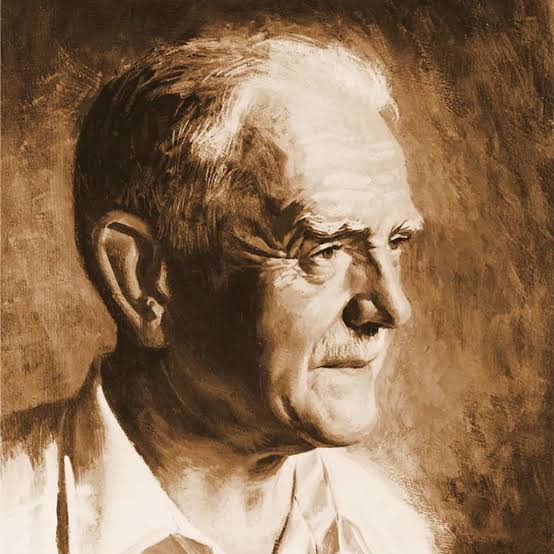
At that time I knew God would make all things clear through Norman because he like me was British, I just knew I would understand what Norman was saying.
Over the years of grounding and settling what he said I now take for granted as my daily life, but in the last year I’ve found my self unsettled again so I’m listening to the series again in 2025.
What an awesome life we live to be One with God!
“The Meaning Of Life – 1. God Only”Meaning of Life 53:51
2. “The Meaning Of Life – 2. Where We Begin” 53:51
3. “The Meaning Of Life – 3. Free to be Ourselves” 49:46
4. “The Meaning of Life – 4. From Negative to Positive Believing” 47:49
5. “The Meaning of Life – 5. From Romans 7 to Romans 8”
44:11
6. “The Meaning of Life – 6. I Will Do it Through YOU”
My dear friend and neighbor Brian Symonds helped me see through the lens of my first single lens reflex camera, the famous Olympus OM 10
Below is what his wife wrote about him when I invited her to write about Brian’s passion for photography.
“I first met Brian in 1967 and we eventually married in 1973.
I can always remember him saying that we would love to take up photography seriously. He was asked to do several weddings in Birmingham, including his daughters from his first marriage.Also did children’s portraits and students in their caps and gowns.
Brian’s love of photography stemmed from his love of the beauty of all Gods creations, from insects, humans, land and seascapes and mountains. he had a natural eye for capturing a picture that perhaps someone else, would pass by without noticing.
In 1976 we came to live in Telford, but Brian had to give up work as a drayman in a brewery, because of a serious spinal disease. The sale of our house in Birmingham, gave us a little spare cash, to get equipment that Brian needed to take his love of the camera further.
We bought an enlarger and developer and printer, and all the paper and chemicals that he would need.He also needed a new camera, a NIKON FE, and several lenses and filters. We both went to night school, a college course, to learn all about printing and developing, which was useful because if Brian was not well enough to do it, then I could.
Where ever we went Brian always carried his camera with him. We joined the Telford Camera Club which was held in the Lord Silken school (Telford Park School, as it was). We enjoyed the experience and company of the other photographers, and Brian even won several of the competitions, eventually he became secretary of the club, which he enjoyed immensely.
He arranged competitions with other clubs and did exhibitions of the work. Unfortunately, due to a serious flareup of his spinal condition, he had to give up this position and for the time, the photography, as well.
Brian taught several people how to use their camera, and the best way to capture a good photo. One was a young lady, who has now got her own photographic studio in France, and is doing very well.
Also, Brian would take Tony, who lived next door to us in Hollinswood, with him traveling around the local area.They captured the beautiful scenery, that Shropshire has, and enjoyed each others company.
Tony’s love of the camera has continued, even though he moved to America. Brian continued to take photographs and on many occasions did work for a caravan park in Talybont, Barmouth, he did photos for their brochures, The Site owners, even asked Brian to do photographs of the site, for 400 calendars, this kept us busy for several years.
Brian never lost his love of photography, even when he became seriously ill with cancer, he still tried to take pictures. Two weeks before he died, we had snow and he was there at the door, taking pictures of the garden and the woods beyond, even took a photo of a little lonely robin that befriended him.
Sadly Brian died on 11th January 2011- his 74th birthday and and our family and the world lost a very Special Man.”
Brian’s legacy continues to live on through me .
When I first moved to the USA our next door neighbors daughter wanted to learn photography and we bought her a DSLR outfit to encourage her continued learning.
This love of teaching others what Brian had taught me continues to be multiples through students at Homer’s Coffee House who wanted to Learn – Billy the fireman, Bethany, and whoever asks to learn to take better photos.




 Maden L❤️V Design 🤗Community
You must be logged in to post a comment.